Honey is one of nature’s sweetest foods, but not every product sold as honey is necessarily pure. Some products may contain added sweeteners, while others may be mislabeled or processed in ways that affect their quality. So, how can you tell whether the honey you buy is genuine?
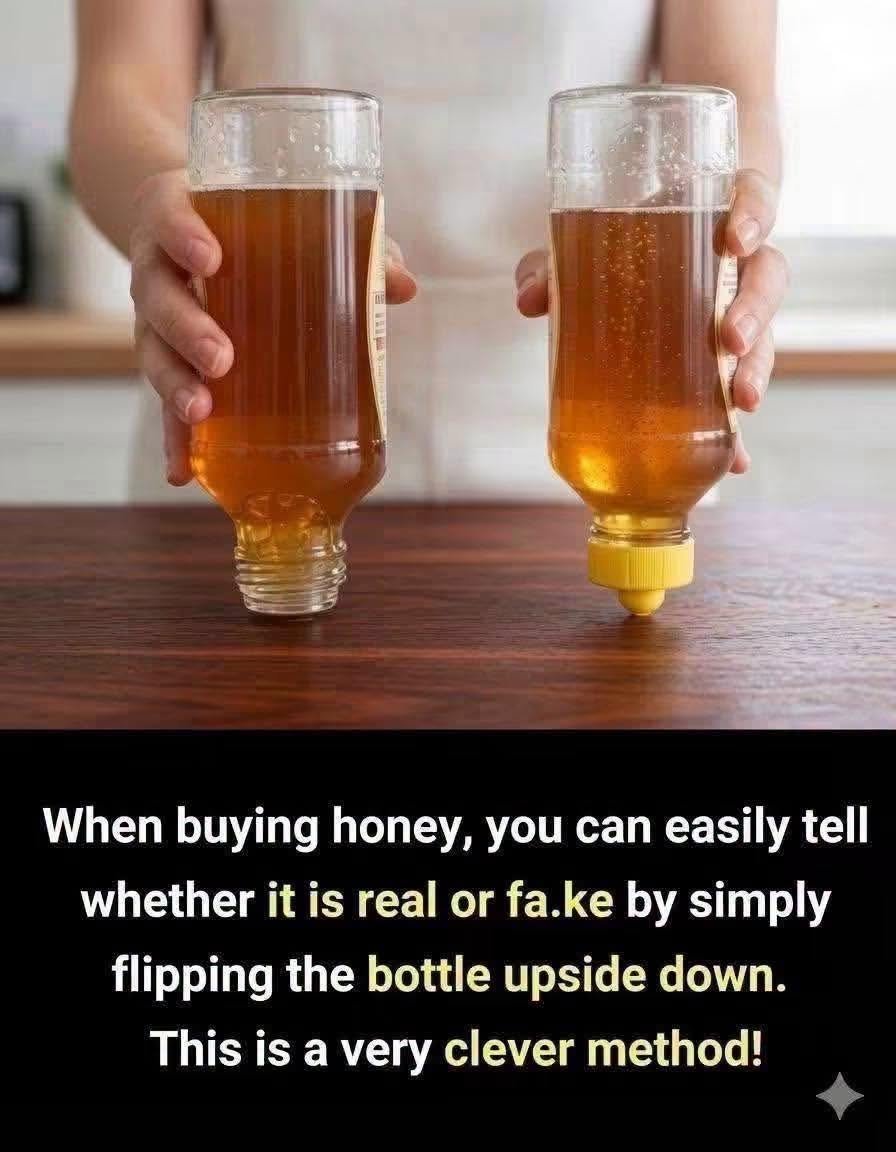
You may have seen the popular trick of turning a honey bottle upside down. Although it looks convincing, this test cannot reliably tell you whether honey is pure or adulterated. Here are better ways to assess the honey you bring home.
1. Check the Label Carefully
One of the easiest first steps is to read the ingredient list. If the product is labeled simply as honey, it should not contain added sugar syrup, corn syrup, or other sweeteners.
Look for clear information about the producer, origin, and product. Be cautious of vague claims such as “100% natural” if there is no other information to support them.
2. Does Real Honey Have to Be Thick?
No. Genuine honey can vary considerably in thickness depending on its floral source, moisture content, temperature, and storage conditions.
Some honey flows slowly, while other varieties are more fluid. Warm honey often pours more easily than cold honey, and a naturally high-fructose variety may remain liquid longer.
Thickness alone is not proof of purity.
3. What Happens When You Turn the Bottle Upside Down?
The viral bottle-flipping test suggests that real honey moves slowly while fake honey flows quickly. However, this is not a dependable way to identify pure honey.
Both genuine and adulterated honey can be thick or runny. Temperature, moisture, and the types of sugars present can all affect how quickly a product moves.
You can observe how honey flows, but you cannot confirm its authenticity from this test alone.
4. Why Does Some Real Honey Become Crystallized?
Crystallization is a natural process in which glucose in honey forms tiny crystals. Depending on its floral source and storage conditions, honey may become grainy, cloudy, or almost solid.
This does not mean the honey has gone bad or that it is fake. Some genuine honey crystallizes within weeks, while other varieties remain liquid for much longer.
However, crystallization is not definitive proof of purity either, because adulterated products can also crystallize.
5. Can the Water Test Reveal Fake Honey?
A popular home test involves dropping a spoonful of honey into a glass of water. Some people claim that pure honey sinks while fake honey dissolves quickly.
The problem is that this test is affected by viscosity, temperature, and how the honey is introduced into the water. It cannot reliably establish whether honey contains added syrups.
Use it as a simple demonstration of how honey behaves in water—not as a scientific purity test.
6. Be Careful With the Flame Test
Another online trick recommends dipping a match or cotton wick into honey and trying to light it. This is sometimes presented as a way to identify pure honey.
It is unreliable and potentially dangerous. The result can depend on moisture content and other conditions, and it does not establish whether the honey is authentic. Avoid testing food products with an open flame.
7. Buy From a Reliable Source
When possible, buy honey from a beekeeper, a reputable local producer, or a trusted retailer that can provide information about its origin.
Look for traceability, clear labeling, and appropriate food-safety practices. A higher price or an attractive label does not automatically guarantee quality, but a trustworthy supply chain can give you greater confidence.
8. What Is the Most Reliable Way to Confirm Pure Honey?
If you need certainty, laboratory testing is the most dependable option. Qualified laboratories can use methods such as sugar-profile analysis and isotope-ratio testing to investigate certain forms of adulteration. No single test detects every possible adulterant, so laboratories may use several methods depending on the suspected problem.
For everyday shoppers, the best approach is to combine careful label reading with a trustworthy source rather than relying on one viral trick.
Final Thoughts
Honey is a natural product that can differ in color, aroma, thickness, and crystallization from one variety to another. These differences are normal and do not automatically indicate that a product is fake.
Remember: turning a bottle upside down, testing honey in water, or checking whether it crystallizes cannot conclusively prove its purity. Choose honey from a reliable source, read the label, and seek professional testing if authenticity is genuinely in doubt.
Have you ever tried one of these honey tests? Share your experience in the comments—and let others know which methods you have found helpful!