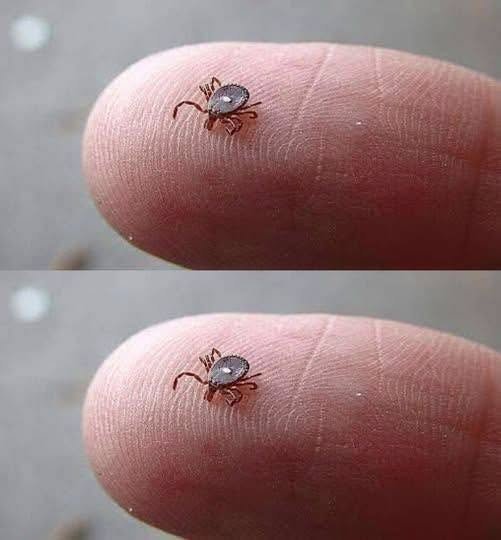
Finding a tiny crawling creature on your child after a walk in the woods can be frightening, especially when it has an unusual white marking on its back. At first glance, it may look like an ordinary tick, but that little spot can offer a useful clue about what it might be.
The good news is that finding a tick does not automatically mean your child will become ill. However, it is important to identify the possible risk, check the skin carefully, and know what to do next.
What Is the Tick With the White Spot?
One possibility is the female lone star tick (Amblyomma americanum), a tick recognized by the distinctive white or silvery spot on the back of the adult female. This species is found mainly in the eastern and central United States.
The marking in the photograph resembles this characteristic pattern, but the image alone is not enough to confirm the species. Tick species vary by region, so where the creature was found is important when identifying it.
Lone star ticks can transmit several diseases, and their bites have also been associated with a condition that causes an expanding rash. This does not mean that every tick with a pale marking is dangerous or that every bite leads to illness. CDC: Lone star ticks
Should Parents Be Worried?
It is understandable to feel concerned, but there is no need to panic. The level of risk depends on the tick species, the location where the exposure occurred, whether it attached to the skin, and how long it remained attached.
A tick crawling across the skin has not necessarily bitten your child. If it was attached, remove it promptly and watch for symptoms afterward.
Some tick-borne illnesses may cause symptoms days or weeks after exposure. Therefore, your child appearing well immediately after the discovery does not completely rule out a problem.
What Should You Do If You Find a Tick on Your Child?
If the tick is still crawling on the skin, carefully remove it without crushing it. If it is attached, follow these steps:
Use fine-tipped tweezers. Grip the tick as close to the skin as possible.
Pull steadily upward. Use even pressure without twisting, jerking, or squeezing the tick’s body.
Clean the area. Wash the bite site and your hands with soap and water.
Save a clear photograph. If possible, keep the tick in a sealed container for identification and ask a healthcare professional what to do with it.
Check your child thoroughly. Examine the scalp, hairline, behind the ears, under the arms, around the waist, behind the knees, and between the legs.
Avoid trying to burn the tick or suffocate it with petroleum jelly, oils, or nail polish. These methods are not recommended. CDC: What to do after a tick bite
Which Symptoms Should You Watch For?
After a possible tick bite, monitor your child for changes in the following days and weeks:
Fever or chills
Headache or unusual tiredness
Muscle or joint aches
A rash that develops or expands around the bite
Swollen lymph nodes or feeling generally unwell
Contact a healthcare professional promptly if your child develops these symptoms, and explain when and where the possible tick exposure occurred. A rapidly worsening condition, severe headache with a stiff neck, difficulty breathing, or unusual confusion warrants urgent medical care.
Do not wait for a rash to appear if your child becomes seriously unwell.
Can You Identify a Dangerous Tick by Its Appearance?
Not reliably. A white spot can be a useful identification feature for certain ticks, but appearance alone cannot establish whether a tick carries an infection. Many ticks are harmless, while some disease-carrying ticks do not have a distinctive white marking.
The geographical location also matters. For example, the lone star tick is widely distributed in parts of the United States, so a photograph should not automatically be used to identify a tick found elsewhere.
If you are uncertain, a local healthcare professional or an appropriate tick-identification service may help.
How Can You Protect Children During Future Walks?
A few simple precautions can reduce the chance of ticks going unnoticed:
Wear long trousers and closed shoes in wooded areas and tall grass.
Use an age-appropriate insect repellent according to its label.
Check clothing, skin, and hair after outdoor activities.
Shower after returning indoors and inspect the body carefully.
Check pets and outdoor equipment that may bring ticks into the home.
These habits are especially useful after walks through brush, long grass, and woodland.
Final Thoughts
That unusual white spot may look alarming, but it is only one clue—not proof that the tick is dangerous. The most important steps are to remove any attached tick correctly, inspect your child for other ticks, and seek medical advice if symptoms develop.
If this happened to your child, do you know what type of tick it was? Share the general location where it was found and whether it was attached to the skin. Those details can help narrow down the possibilities, although a photograph alone may not be enough for a definitive identification.