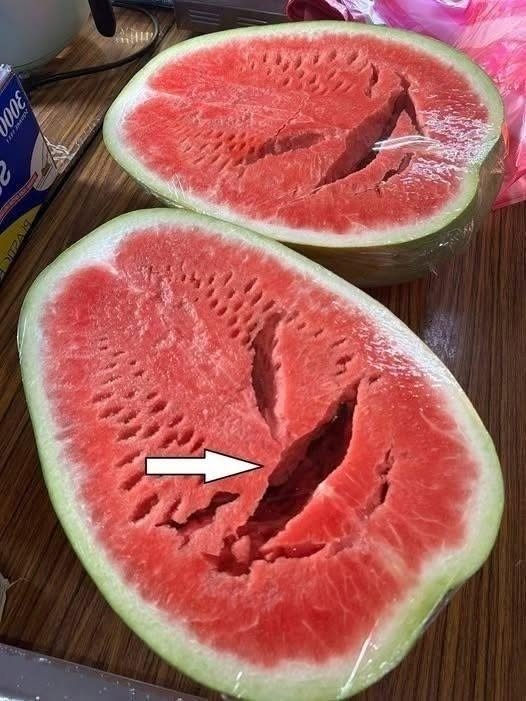
Cutting into a watermelon and finding a large crack through the flesh can be surprising. The good news is that cracks like the ones shown in the photo don’t automatically mean the watermelon is rotten or unsafe.
This condition is commonly associated with internal cracking or hollow heart, depending on the appearance.
🍉 Why Does a Watermelon Crack Inside?
Watermelons can develop internal cracks when the fruit experiences uneven growth.
For example, if the plant receives plenty of water after a period of dry conditions, the fruit can suddenly expand faster than the internal tissues can accommodate. This can create cracks or gaps inside the flesh.
Other factors can include:
Irregular watering
Heavy rainfall after dry weather
Rapid fruit growth
Temperature fluctuations
Certain watermelon varieties
Growing conditions and plant stress
Is a Cracked Watermelon Safe to Eat?
The crack itself doesn’t necessarily make the watermelon unsafe.
If the flesh smells fresh, looks normal apart from the cracking, and hasn’t become slimy or fermented, the watermelon may still be perfectly edible.
However, throw it away if you notice:
A sour or fermented smell
Slimy flesh
Mold
Significant discoloration
An unpleasant or rotten taste
Extensive softening
When in doubt, it’s safer not to eat it.
What About the Large Empty Space?
The hollow-looking area in the photograph can occur as a form of hollow heart, a condition where the interior of the watermelon develops gaps or separations.
It can look dramatic, but it’s primarily a quality issue rather than evidence that someone injected the watermelon with chemicals, as some viral posts suggest.
Does It Mean the Watermelon Is More Nutritious?
Not necessarily.
Internal cracking doesn’t make a watermelon healthier or more nutritious. It is generally considered a physical defect related to how the fruit developed.
The flavor and texture can also vary. Some affected watermelons remain sweet and juicy, while others may have a less desirable texture.
🍉 The Bottom Line
Finding cracks inside a watermelon can look alarming, but internal cracking is usually caused by the fruit’s growing conditions and rapid or uneven development.
If the watermelon smells and looks fresh aside from the crack, you can generally cut away questionable areas and enjoy the remaining flesh. If there are signs of spoilage, however, don’t take the risk.
Have you ever cut open a watermelon and found something like this inside? 🍉👇