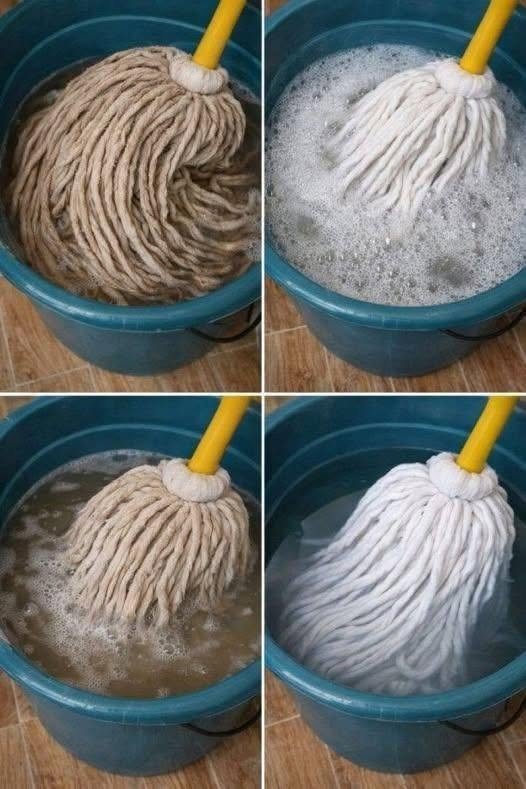
A mop can clean your floors every day, but over time it can become one of the dirtiest items in your home.
After repeated use, mop fibers can turn gray, brown, or yellow and develop an unpleasant smell. Simply rinsing the mop under running water often isn’t enough to remove the dirt, grease, and residue trapped deep inside the fibers.
Before you throw away a dirty mop, try giving it a proper deep clean.
The good news is that you don’t need an expensive product. A few simple household cleaning ingredients can help restore a heavily soiled mop and make it much fresher.
Why Does a Mop Become So Dirty?
A mop picks up much more than visible dust.
During cleaning, its fibers can collect:
Dirt and dust
Grease and oily residue
Food particles
Soap residue
Hair and lint
Bacteria and other microorganisms
Dirt from the floor that remains trapped in the fibers
If the mop is put away while it is still dirty or damp, odors can develop and the fibers can become increasingly discolored.
That’s why washing the mop after use is just as important as cleaning the floor.
The Simple Deep-Cleaning Method
For a washable cotton or microfiber mop, start by removing as much loose dirt as possible.
What You’ll Need
A bucket
Warm water
Liquid laundry detergent or dishwashing detergent
Optional: oxygen-based laundry bleach for suitable washable mop heads
Clean water
Rubber gloves
Step 1: Rinse the Mop
Place the mop head under running water and rinse it thoroughly.
Try to remove as much loose dirt as possible before soaking it.
If the mop is extremely dirty, don’t skip this step. Removing loose debris first makes the washing process much more effective.
Step 2: Prepare a Cleaning Solution
Fill a bucket with warm water and add a small amount of liquid laundry detergent.
For washable mop heads that have stubborn stains, an oxygen-based laundry whitener can be used according to the product’s label instructions, provided the mop manufacturer’s care instructions allow it.
Don’t use more product simply because the mop is very dirty. More detergent or bleach does not necessarily mean better cleaning.
Step 3: Soak the Mop
Place the mop head into the solution and allow it to soak.
For a heavily soiled mop, approximately 20–30 minutes can help loosen dirt and residue.
Occasionally move or agitate the mop in the water while wearing gloves.
You’ll likely notice the water becoming cloudy or brown as dirt is released from the fibers.
Step 4: Rinse Thoroughly
After soaking, rinse the mop several times with clean water.
Continue rinsing until the water runs relatively clear and there is little or no soap remaining.
Leaving detergent trapped in the mop can actually attract more dirt during the next cleaning session.
Step 5: Let It Dry Completely
This step is extremely important.
After washing, squeeze or wring out as much water as possible and hang the mop somewhere with good airflow.
Allow it to dry completely before storing it.
A damp mop left in a closed bucket or poorly ventilated area can quickly develop an unpleasant smell.
What About Vinegar?
White vinegar is sometimes recommended online for cleaning household items.
It can help with certain odors and mineral residues, but it isn’t a substitute for proper washing and disinfection.
More importantly, never mix vinegar with chlorine bleach.
The combination can produce dangerous chlorine gas.
If you’re using a commercial cleaning product, always follow its label instructions and avoid mixing it with other cleaners unless the manufacturer specifically says that it is safe.
What About Baking Soda?
Baking soda can be useful as a mild cleaning ingredient for some household tasks.
However, you don’t need to create complicated mixtures of baking soda, vinegar, bleach, and other products to clean a mop.
A straightforward detergent-and-water wash is often enough for routine cleaning.
For stubborn stains, use an appropriate commercial laundry product according to its instructions.
Can You Put a Mop in the Washing Machine?
Some removable mop heads can be machine washed, but this depends entirely on the material and manufacturer’s instructions.
If the mop head is labeled machine washable:
Remove the mop head from the handle.
Shake or rinse away loose dirt.
Wash it according to the care label.
Avoid mixing it with clothing or towels used for personal hygiene.
Dry it completely before using it again.
Microfiber products may have specific washing requirements, so check the manufacturer’s instructions before using fabric softener or high heat.
When Should You Replace a Mop?
Cleaning can extend the life of a mop, but sometimes replacement is the better option.
Consider replacing it when:
The fibers are permanently damaged.
The mop remains smelly after thorough washing.
The mop head is falling apart.
It no longer absorbs or picks up dirt effectively.
It has been used to clean contaminated material that cannot be safely washed.
The manufacturer recommends replacement.
A mop doesn’t need to look brand-new to be useful, but it should be clean enough to effectively clean your floors.
A Simple Habit That Keeps Your Mop Cleaner
The easiest way to prevent a dirty mop is to clean it immediately after use.
After mopping:
Rinse → wash → rinse again → wring → air-dry.
Don’t leave the dirty mop sitting in the same bucket of used cleaning water.
And never store a wet mop inside a closed container for long periods.
A few extra minutes after each cleaning session can prevent the buildup that makes a mop difficult to restore later.
The Bottom Line
A heavily stained mop doesn’t necessarily mean it’s time to buy a new one.
A thorough wash with warm water and detergent can remove a surprising amount of trapped dirt. For suitable washable mop heads, an oxygen-based laundry product may help with stubborn discoloration when used according to its label.
The most important step is actually the simplest one: rinse the mop thoroughly and allow it to dry completely after every use.
And remember: don’t mix household cleaning chemicals. In particular, never combine chlorine bleach with vinegar, ammonia, or other incompatible cleaners.
Frequently Asked Questions
How do I clean a very dirty mop? Rinse it first, soak it in warm water with detergent, wash or agitate the fibers, rinse thoroughly, and allow it to dry completely.
Can I use bleach to clean my mop? Only if the mop material and manufacturer permit it. Follow the bleach label carefully and never mix chlorine bleach with vinegar, ammonia, or other cleaners.
Why does my mop smell bad after washing? A mop that remains damp can develop unpleasant odors. Thorough rinsing and complete air-drying can help prevent this.
How often should I wash my mop? Ideally, rinse and clean the mop after every use, especially after cleaning heavily soiled floors.
Can I use baking soda and vinegar together? Although they react visibly, combining them largely neutralizes their individual properties. More importantly, vinegar must never be mixed with chlorine bleach.
When should I replace my mop? Replace it when the fibers are damaged, the mop remains unpleasant after proper washing, or it no longer cleans effectively.
Final Takeaway
Don’t throw away a dirty mop just because it looks unpleasant.
Give it a proper wash, rinse it thoroughly, and let it dry completely.
A clean mop doesn’t require a complicated viral cleaning hack—good cleaning habits and the right product used safely are usually all you need.