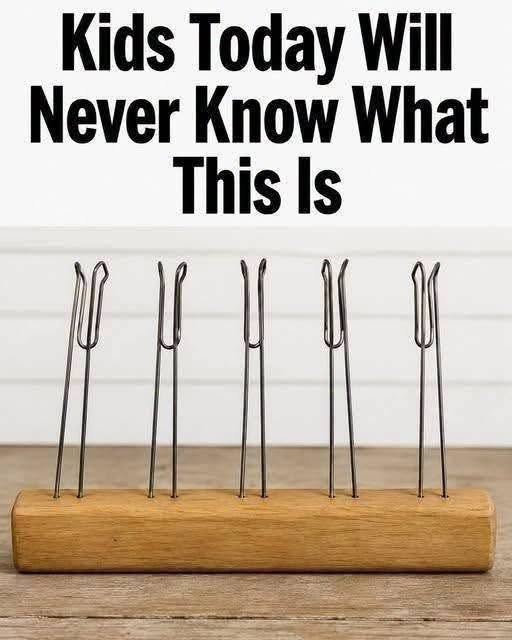
If you came across the object pictured above at a flea market, antique shop, or tucked away in an old sewing or bedroom drawer, you might have absolutely no idea what it was used for.
It looks almost like a tiny collection of wire forks mounted in a wooden block. But this simple-looking object comes from a time when everyday grooming was very different from today.
So, What Is It?
The metal pieces are old-fashioned hairpins, and the wooden block is a holder or stand for keeping them organized and ready to use.
Before modern hair accessories became inexpensive and widely available, women commonly used sturdy metal hairpins to secure elaborate hairstyles, buns, rolls, and updos.
Unlike today’s small plastic clips and elastic hair ties, these pins could be long, strong, and reusable.
How Were Hairpins Used?
The basic principle was simple.
A hairpin was pushed into a hairstyle to hold sections of hair in place. The two long metal legs could slide through the hair and grip it securely.
Depending on the hairstyle, several pins might be needed.
For someone creating a traditional bun or formal updo, having a collection of pins nearby made the process much easier—which explains why a dedicated holder like the one pictured could be useful.
Why Does the Holder Have a Wooden Base?
The wooden block essentially provided a convenient place to store the pins upright.
Instead of leaving sharp metal pins scattered across a dressing table, they could be inserted into the wooden holder where they were easy to see and retrieve.
It also helped prevent the pins from getting lost.
Today, we tend to store hair accessories in drawers, containers, or cosmetic organizers. In earlier generations, a simple wooden stand could perform the same job.
Why Don’t We See These Much Anymore?
Hair fashions changed dramatically over the decades.
Modern hairstyles generally rely on:
Elastic hair ties
Bobby pins
Plastic clips
Claw clips
Hair bands
Styling products
These accessories are inexpensive, easy to manufacture, and convenient to use.
As hairstyles became less elaborate and everyday grooming became quicker, specialized holders and traditional metal hairpins gradually disappeared from ordinary households.
Not Just a Piece of Metal
Objects like this are interesting because they show how much everyday life has changed.
Something that looks completely mysterious to a younger generation may have once been an ordinary household item that someone used every morning.
There was no internet to explain what an unfamiliar object was. No smartphone search. No online shopping for a replacement.
People simply knew what these things were because they were part of everyday life.
A Little Piece of Everyday History
Today, a small wooden hairpin holder might look like nothing more than an antique curiosity.
But it represents an era when people took more time with traditional hairstyles and relied on durable, reusable tools rather than disposable or mass-produced accessories.
Did you recognize this old-fashioned hairpin holder? Or did you have to look twice before figuring it out? 👇
Vintage household objects like this are a fascinating reminder that the simplest things can tell us a lot about how previous generations lived.