Have you ever pulled on an old pair of jeans and noticed strange faded lines, wrinkles, or patterns around the thighs and knees? Some people assume the denim is damaged, while others wonder whether the marks are caused by washing.
In most cases, there’s a much simpler explanation: those marks are created by the way you move and wear your jeans.
What Are Those Marks on Jeans?
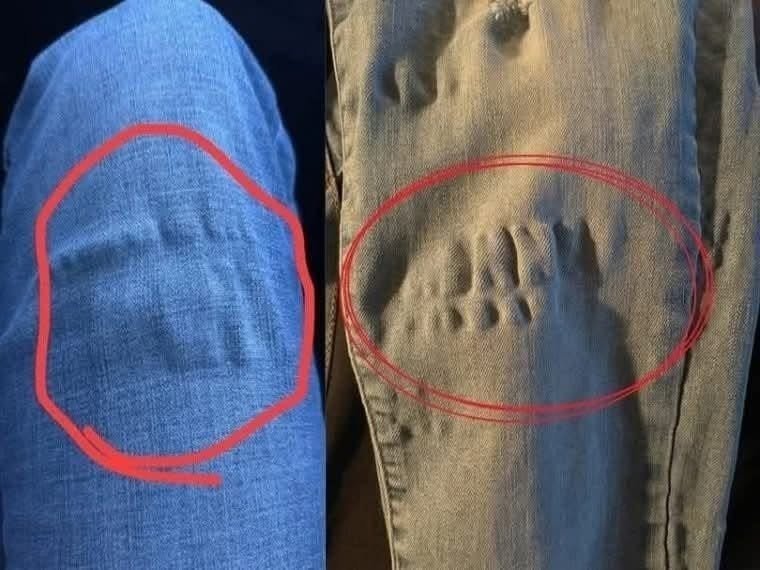
The patterns in the photo are examples of wear patterns and fading that develop naturally in denim.
As you walk, sit, bend your knees, drive, or move around, the fabric repeatedly folds in the same places. Over time, friction removes some of the indigo dye from those areas, creating lighter lines and contrasting patterns.
These marks are especially noticeable on darker or raw denim.
1. Whiskers
The horizontal or diagonal faded lines around the upper thighs and hips are commonly called whiskers.
They form where the denim repeatedly creases when you sit, walk, or bend. The more often the same folds occur, the more visible the fading becomes.
2. Honeycombs
The irregular lines behind the knees are often called honeycombs.
When you bend your legs, denim bunches behind the knees. Repeated bending and friction gradually produces a distinctive series of faded creases.
3. Stacking
You may also notice extra folds and fading around the lower legs and ankles. This is known as stacking.
It happens when jeans are slightly longer than your legs, causing excess denim to gather above your shoes.
Why Do Some Jeans Develop These Patterns Faster?
Several factors can affect how quickly denim develops visible wear:
How often you wear the jeans
How tightly they fit
The type and weight of the denim
How much you move throughout the day
How frequently you wash them
The original dye and finishing process
Raw or untreated denim tends to make these patterns particularly obvious because the contrast between the original indigo and the faded areas becomes stronger over time.
Are These Marks a Sign That Your Jeans Are Damaged?
Not necessarily.
In fact, denim enthusiasts often consider these patterns desirable because they make a pair of jeans unique to the person wearing them.
Two identical pairs can eventually look completely different because everyone’s posture, movement, body shape, and daily routine are different.
Can You Prevent Them?
You can reduce or slow the development of these marks, but you can’t completely prevent normal wear if you regularly wear your jeans.
Washing according to the manufacturer’s instructions, avoiding unnecessary friction, and choosing a fit that doesn’t create excessive tension can help preserve the fabric.
However, fading and creasing are a normal part of denim aging.
The Bottom Line
Those mysterious marks aren’t usually stains or defects. They’re essentially a record of how the jeans have been worn.
The lines around the thighs are often called whiskers, while the distinctive creasing behind the knees is known as honeycombing. Over months or years, these patterns can become a visual fingerprint of your everyday movements.
So the next time you see them on your favorite jeans, don’t automatically throw them away. They’re often simply signs that your denim has been lived in.