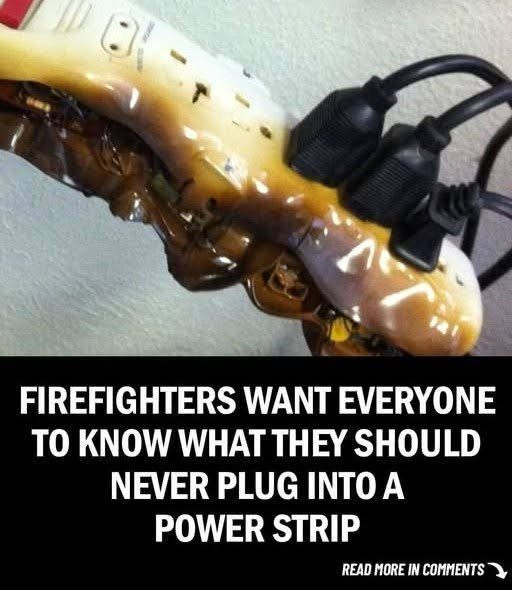
Power strips are convenient, but they are not designed to handle every type of electrical appliance. Overloading one can cause overheating, melted components, electrical fires, or even damage to your home’s wiring.
🔥 Avoid plugging these into a basic power strip:
Space heaters – among the biggest risks because they draw a lot of power continuously.
Air conditioners – portable and window units can exceed the safe load of many strips.
Refrigerators and freezers – their compressors can create high startup loads; a properly grounded wall outlet is preferable.
Microwaves and toaster ovens – high-wattage heating appliances should generally go directly into a wall outlet.
Electric kettles and coffee makers – heating elements consume substantial power.
Washing machines and dryers – use the dedicated outlet recommended by the manufacturer.
Hair dryers and curling irons – especially dangerous when combined with other high-power appliances.
Large power tools – saws, compressors, and similar equipment can draw significant current.
⚡ The biggest mistake: daisy-chaining
Never plug one power strip into another, or use an extension cord to create a long chain of strips. The combined load can exceed the rating of the wiring and protective devices.
✅ What is usually fine?
Low-power electronics such as phones, tablets, lamps, computers, monitors, routers, and chargers are generally appropriate for a quality, properly rated power strip.
Important: Check the strip’s wattage/amp rating and the appliance manufacturer’s instructions. A power strip doesn’t increase the amount of power a wall circuit can safely supply.
If a power strip becomes hot, smells like burning plastic, buzzes, or shows discoloration, unplug it and replace it rather than continuing to use it.