Have you ever noticed the small round button attached to your car’s seat belt and wondered why it’s there?
Most people use a seat belt every day without ever thinking about the tiny details built into it. But that little button has a surprisingly practical purpose.
It isn’t decorative, and it isn’t an emergency release.
So, what exactly does it do?
The Little Button Is a Seat Belt Stop
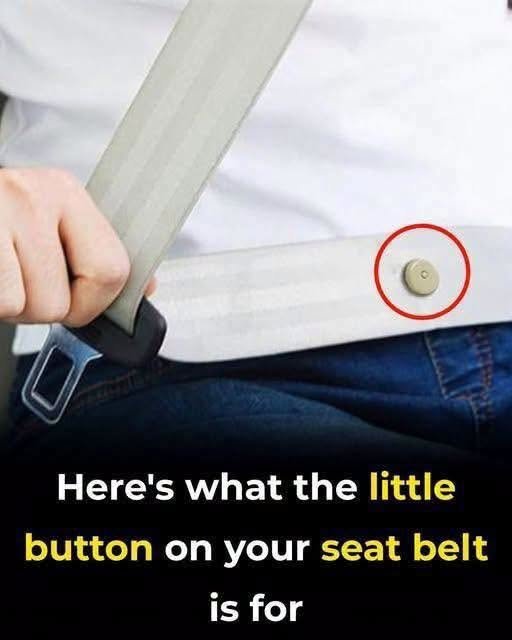
The small button attached to the seat-belt webbing is commonly called a seat-belt stop or webbing stop.
Its main job is to prevent the metal buckle tongue from sliding too far down the belt when the belt is not being worn.
Without the stop, the buckle could slide freely along the webbing and end up near the floor, between the seats, or in another inconvenient position.
The button provides a physical stopping point.
Why Is This Small Part Important?
Imagine getting into your car and reaching for the seat belt.
If the buckle had slid all the way down toward the floor, you would have to search for it and pull it back up before fastening the belt.
The small button helps keep the buckle in a convenient position.
This makes the seat belt easier to grab and use.
It is a simple example of a tiny design feature solving an everyday problem.
What Happens When You Pull the Seat Belt?
When you pull the seat belt across your body, the metal latch plate slides along the webbing until you insert it into the buckle.
The small stop helps limit how far the latch plate can travel when the belt is retracted.
When you release the belt, the retractor pulls the webbing back toward its storage point, while the stop helps keep the latch plate from disappearing too far down the belt.
That’s why the buckle is generally waiting in an accessible location the next time you get into the vehicle.
It Doesn’t Lock the Seat Belt
One common misunderstanding is that the little button somehow locks the seat belt.
It doesn’t.
The actual locking and restraint mechanisms are located elsewhere in the seat-belt system.
A modern seat belt typically includes a retractor, which controls the movement of the webbing and can lock under certain conditions, such as rapid belt movement or during a crash.
The small button on the webbing is simply a positioning stop.
What If the Button Breaks?
Because the button is small, it can occasionally become damaged or come loose.
If that happens, the buckle may start sliding farther down the belt than it normally should.
That can make the belt inconvenient to use.
More importantly, you should not modify or repair a seat belt with improvised materials. Seat belts are important safety equipment, and repairs should follow the vehicle manufacturer’s instructions.
If the belt, buckle, retractor, stitching, or other components are damaged, have the system inspected by a qualified technician.
There May Be More Than One Small Stop
Depending on the vehicle and seat-belt design, you may notice other small buttons, stops, or stitched sections on the webbing.
Different manufacturers use different designs, but these components can serve similar positioning or retention purposes.
The exact design can vary between vehicles.
Why Don’t Most People Notice It?
The button is easy to overlook because it is tiny and sits directly on the seat-belt webbing.
Most people simply pull the belt across their body, click it into place, and drive away.
But automotive designers pay attention to these small details because convenience matters. A seat belt that is easy to locate and use encourages people to wear it properly.
Don’t Remove or Alter It
It might be tempting to remove the button if it becomes loose or annoying, but it’s better not to alter the seat-belt system yourself.
A seat belt is a critical safety component.
If a stop is damaged or missing, the safest approach is to consult the vehicle manufacturer, owner’s manual, or a qualified automotive technician about the appropriate replacement.
Avoid using glue, tape, wire, or other improvised fixes on safety-critical seat-belt components.
The Bottom Line
So, what is that mysterious little button on your seat belt for?
It’s mainly there to keep the metal latch plate from sliding too far down the webbing.
Without it, the buckle could move out of reach and become inconvenient to find.
It’s a tiny component, but it makes the seat belt easier to use every day.
The next time you get into your car, take a look at your seat belt. That little button may be easy to ignore, but it has a simple and useful job.
Frequently Asked Questions
What is the little button on a seat belt called? It is commonly called a seat-belt stop, webbing stop, or belt stop.
What does the button on the seat belt do? It helps prevent the metal latch plate from sliding too far along the seat-belt webbing.
Does the button make the seat belt safer? Its main purpose is positioning and convenience rather than locking the belt during a crash. The seat-belt retractor and other restraint components perform the critical safety functions.
Can I remove the seat-belt button? It is not recommended to modify or remove components from a seat-belt system. If it is damaged, have it properly inspected or replaced.
What if my seat-belt stop is broken? Consult your vehicle’s owner manual or a qualified technician for the correct replacement. Avoid improvised repairs to safety equipment.
Final Takeaway
The next time someone asks about that tiny button on a car seat belt, you’ll know the answer.
It isn’t there by accident.
Its simple job is to keep the buckle tongue in a convenient position on the belt so it’s easy to reach and use.
Sometimes the smallest parts of everyday objects have the most practical explanations.