When most people think of mushrooms, they picture the neat clusters found in grocery stores or the small varieties growing in gardens.
But mushrooms can look completely different in their natural habitat.
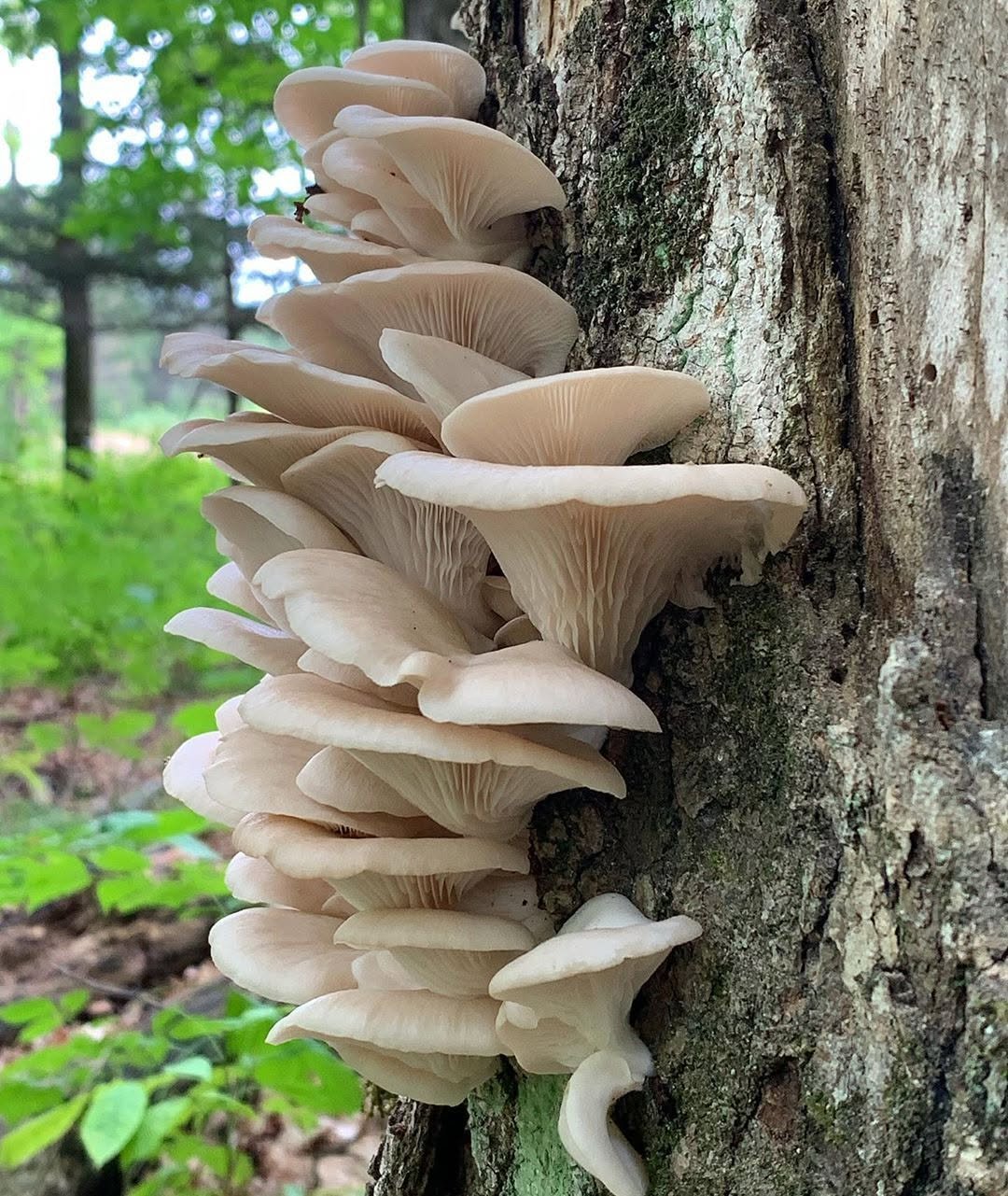
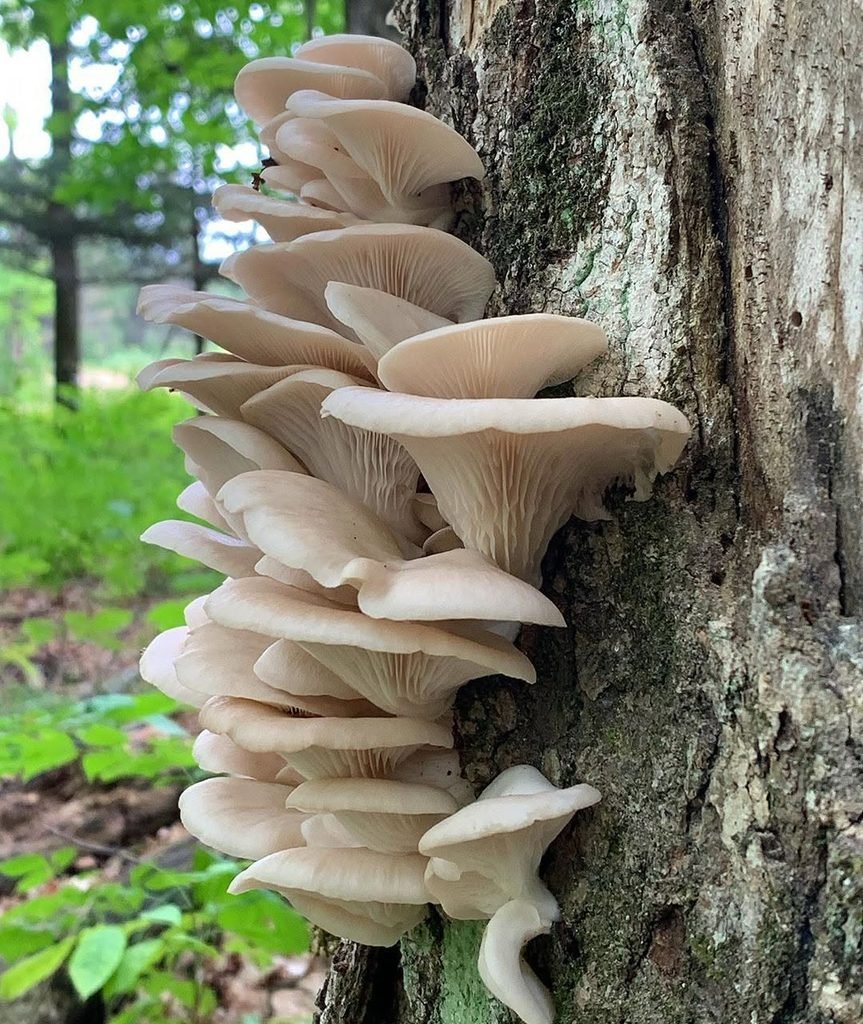
The photograph above shows a spectacular cluster of pale, shelf-like mushrooms growing directly from the trunk of a tree. Their overlapping caps and delicate gills give them the unmistakable appearance of oyster mushrooms.
And seeing a large wild cluster like this can be an amazing sight.
What Are Oyster Mushrooms?
Oyster mushrooms are fungi belonging to the genus Pleurotus.
They get their common name from the shape of their caps, which can resemble an oyster shell. Depending on the species and growing conditions, they may be white, cream, gray, tan, or even slightly bluish.
Unlike many mushrooms that emerge from the ground, oyster mushrooms commonly grow directly from wood.
They are particularly associated with dead or dying trees, fallen logs, and stumps.
Why Are They Growing on This Tree?
Oyster mushrooms are wood-decaying fungi.
They obtain nutrients by breaking down components of wood, including lignin and cellulose.
In nature, this makes them extremely important.
A tree eventually falls, branches die, and wood accumulates in the forest. Fungi such as oyster mushrooms help decompose that material and return nutrients to the ecosystem.
In other words, mushrooms aren’t simply growing on the tree.
They’re participating in the process that helps turn dead plant material back into nutrients that can eventually be used by other organisms.
Why Do They Grow in Those Huge Clusters?
One of the most recognizable characteristics of oyster mushrooms is their tendency to form overlapping shelves or clusters.
Several fruiting bodies may emerge from the same area of wood.
As they grow, their broad caps spread outward, creating the layered appearance seen in the photograph.
The mushrooms shown here are particularly striking because there are so many fruiting bodies growing together.
Look at the Gills
One of the easiest features to notice in an oyster mushroom is the arrangement of its gills.
The gills are the thin structures underneath the cap.
In oyster mushrooms, they typically run downward toward the point where the mushroom attaches to the wood. This feature is called decurrent gills.
The gills dramatically increase the surface area available for producing and releasing microscopic spores.
Those spores are essentially the mushroom’s reproductive units.
Are Wild Oyster Mushrooms Edible?
Some species of Pleurotus are highly valued edible mushrooms and are widely cultivated commercially.
However, there’s an important distinction:
A mushroom that looks like an oyster mushroom in a photograph should not automatically be eaten.
Wild mushroom identification requires more than simply recognizing a general appearance.
Some mushrooms can resemble edible species, and incorrect identification can result in serious poisoning.
Even experienced foragers consider multiple characteristics, including:
Cap shape and color
Gills
Stem structure
Spore print
Growth substrate
Odor
Season
Geographic location
Microscopic characteristics when necessary
A photograph can provide useful clues, but it generally isn’t enough to guarantee a safe identification.
Never Rely on a Viral Photo for Mushroom Identification
This is especially important because social media often contains captions such as:
“Found dinner growing on a tree!”
That may make for an entertaining post, but it’s not a reliable method of determining whether a wild mushroom is safe to eat.
If you find a mushroom outdoors and want to forage it, have it identified by a qualified local mushroom expert or mycological society before consuming it.
And if you’re uncertain, the safest rule is simple:
Don’t eat it.
Oyster Mushrooms Are Also Easy to Grow
Interestingly, you don’t need to hike through a forest to see oyster mushrooms.
They are among the easiest gourmet mushrooms to cultivate.
Commercial growers commonly produce them on prepared substrates such as:
Straw
Hardwood sawdust
Wood-based growing blocks
Agricultural by-products
Under suitable conditions, oyster mushrooms can produce large clusters in a relatively short period.
This is one reason they’re popular with both commercial mushroom farms and home growers.
What Makes Oyster Mushrooms Nutritious?
When properly identified and prepared, edible oyster mushrooms can be a nutritious addition to a balanced diet.
They provide:
Protein
Fiber
B vitamins
Minerals
Various bioactive compounds
Like other mushrooms, their nutritional profile can vary depending on the species, growing conditions, and preparation method.
They’re also relatively low in calories, making them a popular ingredient in plant-forward meals.
How Are Oyster Mushrooms Usually Cooked?
Cultivated oyster mushrooms are extremely versatile.
They can be:
Sautéed
Cook them in a little oil or butter until the edges become golden and crisp.
Added to soups
Their texture works particularly well in broths and vegetable soups.
Stir-fried
They pair nicely with garlic, ginger, soy sauce, and vegetables.
Roasted
High heat can give them wonderfully browned, crispy edges.
Used as a meat substitute
Large oyster mushroom clusters can be roasted or grilled and used in sandwiches, tacos, and other dishes.
One important point: wild mushrooms should only be cooked and eaten after their identity has been reliably confirmed.
Mushrooms Are Nature’s Recyclers
Perhaps the most fascinating thing about a photograph like this isn’t simply that the mushrooms are edible.
It’s what they’re doing for the forest.
Fungi are among nature’s most important decomposers.
Without fungi and other decomposing organisms, enormous quantities of dead wood and plant material would accumulate in ecosystems.
By breaking down organic matter, fungi help recycle nutrients and make them available again.
So that beautiful mushroom cluster is actually part of a much larger ecological process.
What Does This Photograph Show?
The mushrooms in the image strongly resemble oyster mushrooms (Pleurotus species) because of their pale overlapping caps, prominent decurrent gills, and growth directly from the tree.
However, a photograph alone isn’t sufficient for a definitive species identification or an edible-foraging recommendation.
If you’ve encountered a similar cluster in the wild, admire it, photograph it, and—if you’re interested in eating it—get the specimen professionally identified first.
Nature can be beautiful, delicious, and sometimes dangerous.
That’s exactly why wild mushrooms deserve a little respect. 🍄🌳