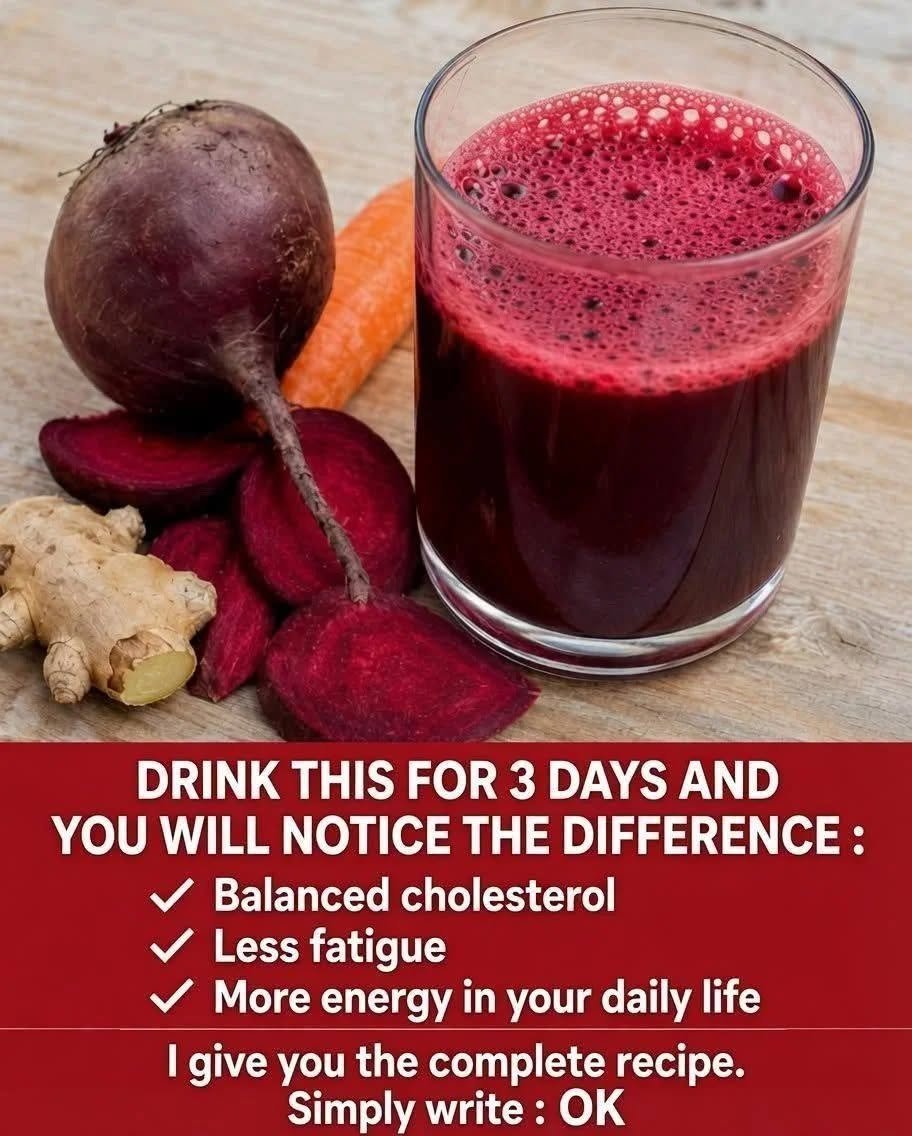
Beetroot, carrot, and ginger make a vibrant combination that has become popular among people looking for a simple homemade wellness drink.
The deep red color of beetroot, the natural sweetness of carrots, and the spicy flavor of fresh ginger create a juice that is both refreshing and packed with plant compounds.
But can drinking this juice for just three days really “balance cholesterol,” eliminate fatigue, and dramatically increase your energy?
The answer is more nuanced.
This juice can be a nutritious addition to a balanced diet, but there is no good evidence that drinking it for three days will produce guaranteed changes in cholesterol or energy levels.
Let’s look at what each ingredient can actually offer.
What Makes This Juice Interesting?
Each ingredient brings different nutrients and plant compounds to the recipe.
Beetroot
Beetroot is naturally rich in dietary nitrates. The body can convert nitrates into nitric oxide, which plays a role in blood-vessel function and blood flow.
Beets also contain folate, potassium, fiber, and colorful plant compounds called betalains.
Research suggests that nitrate-rich beetroot products may help support healthy blood pressure and exercise performance in some people.
Carrots
Carrots are well known for their beta-carotene content.
Beta-carotene is converted by the body into vitamin A, which is important for normal vision, immune function, and maintaining healthy skin.
Carrots also provide other carotenoids and plant compounds.
Ginger
Ginger adds more than flavor.
Ginger contains naturally occurring compounds such as gingerols and has been studied for its potential effects on nausea and digestive symptoms.
It also gives the juice a warming, spicy flavor that pairs particularly well with naturally sweet carrots and earthy beetroot.
Can This Juice Lower Cholesterol?
This is where viral health posts often go too far.
There is not enough evidence to say that a three-day beetroot, carrot, and ginger juice routine will “balance” or normalize cholesterol.
Cholesterol levels are influenced by genetics, overall diet, physical activity, body weight, medical conditions, and other factors.
Some foods and dietary patterns can help support healthier cholesterol levels over time, particularly diets rich in soluble fiber, nuts, seeds, legumes, vegetables, fruits, and unsaturated fats.
Whole beets and carrots contain fiber, but juicing removes much of the fiber.
If cholesterol management is your goal, eating the whole vegetables as part of a balanced diet may be more beneficial than relying on juice alone.
Can It Give You More Energy?
You may feel refreshed after drinking a cold, flavorful juice, but it is misleading to promise that this recipe will automatically eliminate fatigue.
Persistent tiredness can have many causes, including insufficient sleep, stress, dehydration, inadequate food intake, anemia, medication effects, or underlying medical conditions.
A nutritious drink can contribute calories and nutrients, but it shouldn’t be presented as a treatment for unexplained fatigue.
If tiredness continues or is severe, it’s worth discussing it with a healthcare professional.
Beetroot and Exercise Performance
One of the more interesting areas of beetroot research involves physical activity.
Beetroot contains dietary nitrates, which can contribute to nitric oxide production. Nitric oxide is involved in blood-vessel dilation and circulation.
Some studies have found that nitrate-rich beetroot products can improve exercise efficiency or endurance in certain circumstances.
However, the results depend on the amount consumed, the type of exercise, and the individual.
That means beetroot juice may be an interesting option for physically active people, but it is not a magic energy drink.
A Simple Beetroot, Carrot and Ginger Juice Recipe
If you’d like to try the combination, here’s a simple homemade version.
Ingredients
1 medium beetroot
2 medium carrots
A small piece of fresh ginger
½ lemon, optional
½–1 cup of water, depending on your blender
Ice, optional
Instructions
Wash the beetroot and carrots thoroughly.
Peel them if desired and cut them into smaller pieces.
Peel the ginger.
Add the ingredients to a blender with water.
Blend until smooth.
If you prefer a thinner drink, strain it through a fine sieve.
Add a squeeze of lemon for extra freshness.
Serve immediately.
Tip: Keep the Pulp
If you use a blender rather than a juicer, consider keeping the pulp.
The pulp contains dietary fiber, which is removed or greatly reduced when vegetables are strained into traditional juice.
For a more filling drink, blend the ingredients thoroughly and drink the mixture without straining.
How Often Can You Drink It?
There is no medically established requirement to drink beetroot, carrot, and ginger juice for a specific number of days.
For most healthy adults, a moderate serving can fit into a varied diet.
However, juice can be easy to consume quickly and may contain a substantial amount of naturally occurring sugar from several fruits or vegetables. Whole vegetables generally provide more fiber and are more filling.
Think of this drink as one part of a healthy diet, not a detox or cure.
Why Does Beetroot Turn Everything Red?
Don’t be surprised if your urine or bowel movements look pink or reddish after consuming beetroot.
This can happen because of beetroot pigments and is commonly referred to as beeturia when it affects urine.
It is often harmless.
However, if you see unexplained blood in your urine or stool, especially when you haven’t eaten beetroot, don’t automatically assume it is beet-related. Seek medical advice.
Who Should Be Careful?
Although beetroot, carrots, and ginger are foods rather than medicines, individual circumstances matter.
People with certain medical conditions or dietary restrictions may need to modify their intake.
Beetroot is relatively high in oxalates, so people who have been advised to follow a low-oxalate diet should discuss appropriate portions with a healthcare professional.
People taking medications that affect blood pressure or blood clotting should also speak with their healthcare provider before making major dietary changes involving concentrated supplements or large amounts of particular foods.
Juice vs. Whole Vegetables
One important point often missing from social-media recipes is the difference between juice and whole vegetables.
When you eat whole beetroot and carrots, you consume their fiber.
When you juice them and discard the pulp, much of that fiber is left behind.
Fiber helps support digestive health and can contribute to fullness.
For that reason, a balanced diet should include whole vegetables even if you occasionally enjoy fresh juice.
The Bottom Line
Beetroot, carrot, and ginger juice can be a colorful and nutritious homemade drink.
Beetroot provides nitrates and plant compounds, carrots provide beta-carotene and other carotenoids, and ginger contributes distinctive plant compounds and flavor.
However, there is no reliable reason to believe that drinking this juice for only three days will automatically normalize cholesterol, eliminate fatigue, or dramatically increase energy.
Rather than looking for a three-day miracle, focus on the bigger picture: eat plenty of vegetables and fruit, choose high-fiber foods, stay physically active, get enough sleep, stay hydrated, and follow medical advice when you have a health condition.
That’s where the real long-term benefits come from.
Frequently Asked Questions
Is beetroot, carrot, and ginger juice healthy?
It can be a nutritious drink when consumed as part of a balanced diet. It provides various vitamins, minerals, and plant compounds.
Can this juice lower cholesterol?
It should not be considered a treatment for high cholesterol. Managing cholesterol generally requires a broader dietary and lifestyle approach and, for some people, medication prescribed by a healthcare professional.
Does beetroot juice increase energy?
Beetroot may support exercise performance in some circumstances because of its nitrate content, but it is not a guaranteed treatment for fatigue or low energy.
Can I drink this juice every day?
Many healthy people can include moderate amounts of vegetable juice in their diet. However, whole vegetables should remain an important part of your diet because they provide more fiber.
Can ginger help digestion?
Ginger has been studied for digestive symptoms, particularly nausea, although individual responses vary.
Why does beetroot make urine red?
Beetroot pigments can cause pink or red urine in some people. This is generally harmless when it occurs after eating beetroot.
Is this a detox drink?
There is no need to call it a “detox.” Your body already has organs such as the liver and kidneys that process and eliminate waste. This juice can simply be enjoyed as a nutritious food or beverage.
Final Takeaway
A glass of beetroot, carrot, and ginger juice can be a delicious way to add more plant foods to your diet.
Just don’t expect a three-day miracle.
Healthy eating works best as a long-term habit, not a quick fix.
Enjoy the juice, keep eating whole vegetables, and focus on the overall quality of your diet for lasting health benefits.
Medical Disclaimer
This article is for general educational purposes only and is not medical advice. It does not diagnose, treat, cure, or prevent any disease. If you have high cholesterol, persistent fatigue, kidney problems, diabetes, or another medical condition, speak with a qualified healthcare professional about your individual dietary needs.