Every time we peel an orange, a surprisingly large amount of the fruit ends up in the trash.
But those colorful peels still contain fragrant oils and useful plant compounds, which is why orange peel has long been reused for everything from cooking and baking to household cleaning.
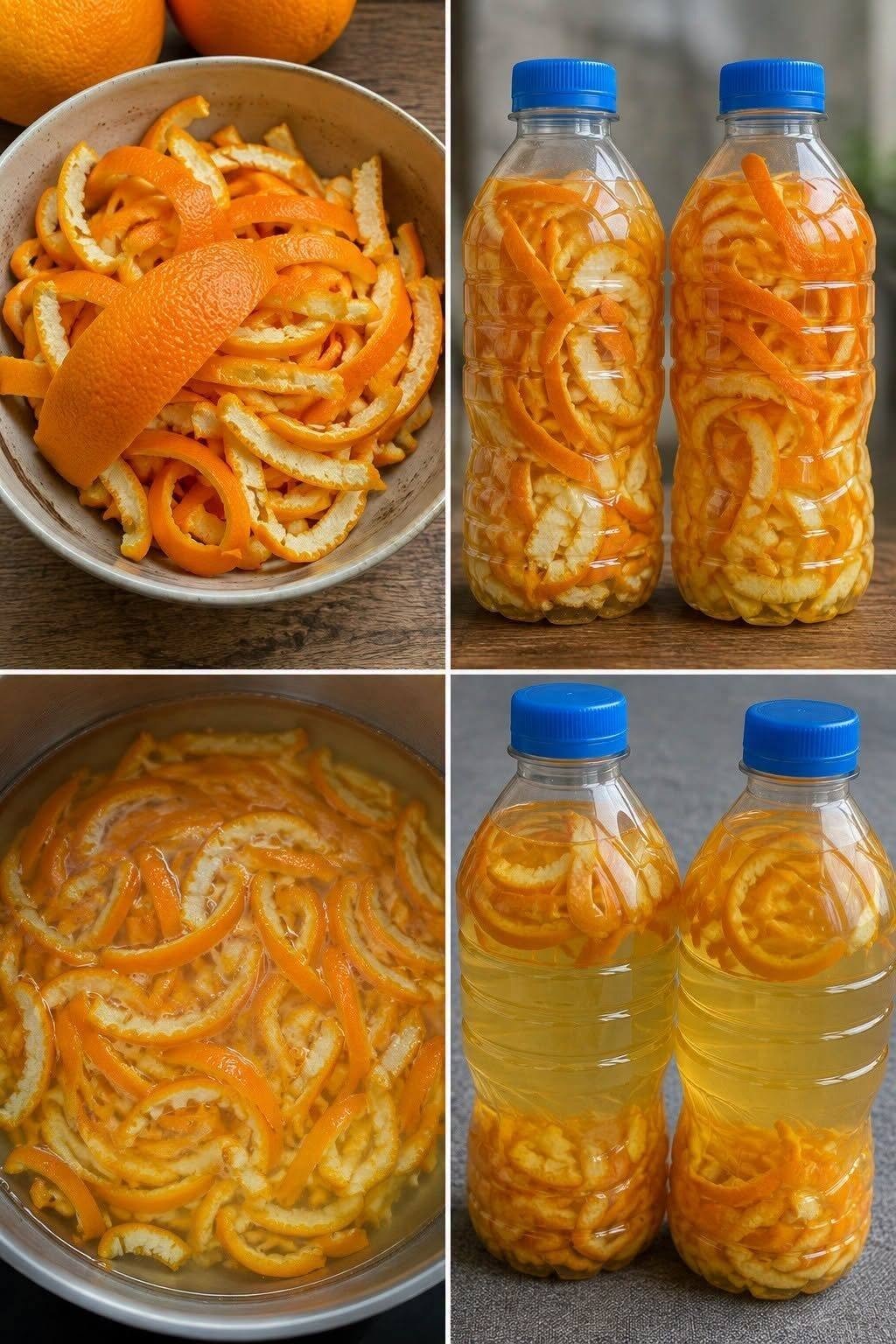
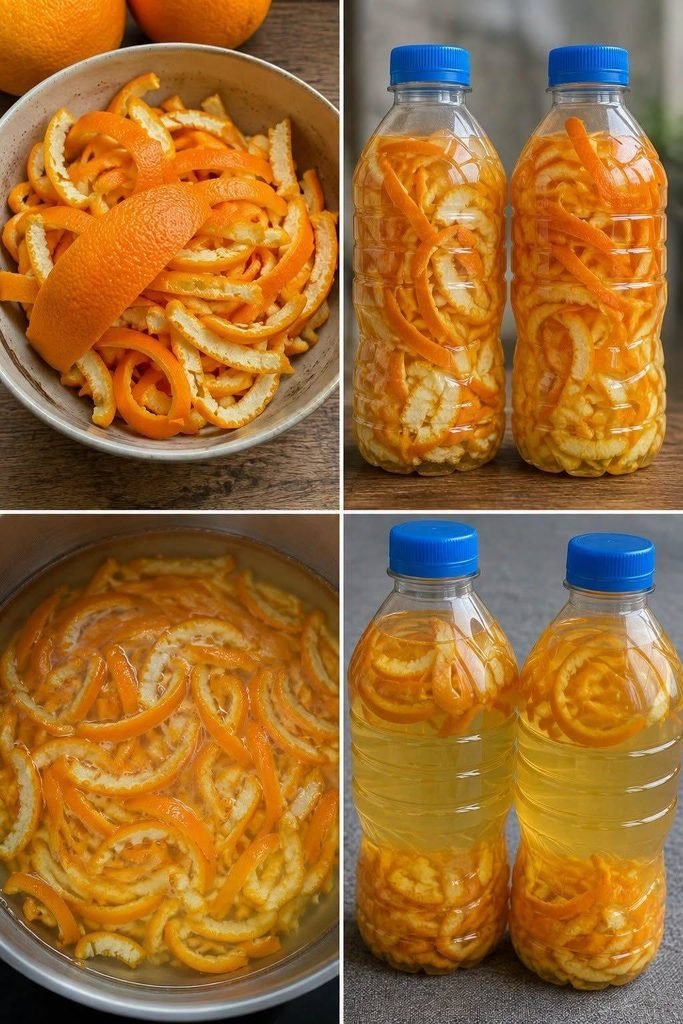
A popular online hack shows people filling bottles with orange peels and water and letting them sit. The idea sounds simple, but there is an important question:
What exactly are you making—and is it safe?
The answer depends on what you put in the bottle and how you treat it.
Why Are Orange Peels Useful?
Orange peel contains aromatic compounds, including limonene, which gives citrus its characteristic smell.
The peel also contains plant compounds and small amounts of nutrients and fiber.
That makes orange peels useful for more than simply throwing into the garbage.
You can use fresh or dried orange peel for:
Homemade citrus-infused vinegar
Cooking and baking
Flavoring drinks
Homemade potpourri
Compost
Deodorizing
Certain household cleaning applications
But simply putting orange peels in a bottle of water does not automatically create a powerful cleaning product.
The Easiest Method: Orange Peel Vinegar Cleaner
One of the more practical ways to reuse orange peels is to make a citrus-infused vinegar cleaner.
You’ll need:
Clean orange peels
White distilled vinegar
A clean glass jar
A strainer
A spray bottle
How to make it
Rinse the orange peels well.
Place them in a clean glass jar.
Cover the peels completely with white distilled vinegar.
Close the jar and let it sit in a cool, dark place for roughly 1–2 weeks.
Strain out the peels.
Transfer the infused vinegar to a labeled spray bottle.
Dilute with water if desired for appropriate household cleaning uses.
The vinegar extracts some of the citrus aroma and compounds from the peel.
The result can be useful for cleaning certain household surfaces.
What Can You Clean With It?
A diluted citrus-vinegar solution may be useful for cleaning things such as:
Certain countertops
Sinks
Some washable surfaces
Glass
Kitchen surfaces that tolerate vinegar
However, vinegar is acidic, so it isn’t appropriate for every surface.
Don’t use vinegar cleaners on:
Marble
Limestone
Travertine
Other acid-sensitive natural stone
Some delicate finishes
Surfaces where the manufacturer specifically advises against acidic cleaners
When in doubt, test a small hidden area first.
An Important Warning: Never Mix Vinegar With Bleach
This is extremely important.
Never combine vinegar with chlorine bleach or products containing bleach.
Acidic substances such as vinegar can react with bleach and release dangerous chlorine gas.
Use cleaning products separately and follow the manufacturer’s instructions.
What About Putting Orange Peels in Water?
This is where many viral posts become misleading.
If you simply put orange peels into a bottle of water and leave it at room temperature for days, you’re not necessarily making a safe household cleaner.
The mixture can ferment or spoil, depending on conditions.
Microorganisms can grow in the water, and the result may develop:
Cloudiness
Gas
An unpleasant odor
Mold
Other signs of spoilage
A sealed plastic bottle can also accumulate pressure if fermentation occurs.
So don’t blindly copy a viral recipe that tells you to leave orange peels and water sealed in a bottle for weeks.
What About “Orange Enzyme Cleaner”?
You’ll also find recipes online for something called citrus enzyme cleaner.
These recipes generally combine citrus peels with water and a sugar source and allow the mixture to ferment for an extended period.
Despite the name, these homemade mixtures should not automatically be treated as scientifically standardized “enzymes” or as equivalent to commercial cleaning products.
If you decide to experiment with a fermented citrus cleaner, proper instructions, sanitation, pressure control, and storage matter.
Never tightly seal an actively fermenting mixture in a container that cannot safely vent pressure.
And always label homemade cleaning products clearly.
Can Orange Peel Water Be Used to Water Plants?
This is another popular internet suggestion.
There’s no need to assume that orange-peel water is a miracle plant fertilizer.
Plants need specific nutrients in appropriate amounts, and homemade fruit infusions aren’t a substitute for proper soil management.
In addition, sugary or decomposing mixtures can attract insects or encourage unwanted microbial growth.
If you want to recycle orange peels for your garden, composting them is generally a much more straightforward option.
Can You Drink Orange Peel Water?
Orange peel can be used as a food ingredient, but homemade peel infusions deserve some common-sense precautions.
If you’re preparing orange peel for consumption:
Wash the fruit thoroughly.
Use clean equipment.
Avoid spoiled or moldy peels.
Don’t consume a mixture that has been sitting at room temperature and showing signs of fermentation or spoilage.
Remember that citrus peel can have a strong, bitter flavor.
Orange zest is commonly used in cooking and baking because a small amount provides plenty of citrus flavor.
Don’t Throw Away the Peel When Baking
You don’t need a complicated bottle recipe to get value from orange peels.
One of the easiest uses is simply zesting the orange before peeling it.
Fresh orange zest can be added to:
Cakes
Cookies
Muffins
Pancakes
Sauces
Marinades
Desserts
Salad dressings
You can also dry clean orange peel and use it to add flavor to tea or homemade spice mixtures.
Make Homemade Citrus Potpourri
Orange peels can also make your home smell wonderful.
Place pieces of fresh or dried orange peel with ingredients such as:
Cinnamon sticks
Cloves
Star anise
Dried herbs
You can simmer them gently in water to create a pleasant citrus aroma.
Just keep an eye on the pot and make sure it doesn’t boil dry.
Add Orange Peels to Compost
If you don’t have a use for the peels, composting is another excellent option.
Orange peels are organic material and can eventually break down as part of a properly maintained compost pile.
Cutting large peels into smaller pieces can help them break down more readily.
As with all composting, balance matters. Orange peels shouldn’t make up the entire compost pile.
Can Orange Peels Repel Insects?
Citrus odors are often promoted online as a natural insect repellent.
The reality is more nuanced.
Certain citrus compounds can have insect-repellent properties under particular conditions, but placing a few orange peels around your home is not a guaranteed way to eliminate an infestation.
If you’re dealing with ants, cockroaches, flies, or another pest problem, proper identification and an appropriate control method will generally be much more reliable.
A Better Way to Save Money
The real value of orange peels isn’t that they can replace every cleaning product in your home.
It’s that one piece of fruit can have several uses before it becomes waste.
Instead of throwing the peel away immediately, you can:
🍊 Use the zest
For cooking and baking.
🍊 Infuse vinegar
For certain household cleaning jobs.
🍊 Dry the peel
For cooking, fragrance, or potpourri.
🍊 Compost it
To return organic material to the soil.
🍊 Simmer it
With spices to make your home smell fresh.
These are simple ways to reduce waste without spending much money.
Be Careful With Plastic Bottles
The viral photograph shows orange peels inside plastic bottles.
If you’re storing homemade mixtures, however, a clean glass jar is generally a better choice for an acidic vinegar infusion.
And if something is fermenting, don’t tightly seal it in a container unless the process and container are specifically designed for safe fermentation.
Gas production can create pressure.
A swollen, leaking, or heavily pressurized bottle should not be casually opened or squeezed.
Don’t Believe Every “Natural Cleaner” Claim
Natural doesn’t automatically mean harmless, and homemade doesn’t automatically mean effective.
Orange peel contains useful compounds, but that doesn’t mean an orange-peel mixture can disinfect every surface, remove every stain, kill every pest, or replace every commercial cleaning product.
For example, if you’re trying to disinfect a surface, use a disinfectant that is specifically registered and labeled for that purpose rather than assuming a homemade citrus mixture will do the same job.
Frequently Asked Questions
Can I put orange peels in water overnight?
A refrigerated orange-peel infusion is generally a different matter from leaving peels in water at room temperature for several days. If you’re making something for consumption, keep it refrigerated and use clean ingredients and equipment.
How long can orange peels sit in water?
There isn’t one universal safe time because temperature, cleanliness, acidity, and other factors matter. Don’t consume an old room-temperature peel-and-water mixture simply because it still looks normal.
Does orange peel water clean the house?
Plain orange-peel water isn’t a reliable disinfectant. Citrus-infused vinegar can be useful for certain cleaning tasks, but it shouldn’t be considered a universal cleaner or disinfectant.
Can I put orange peels down the garbage disposal?
Small amounts may be acceptable for some disposals, but orange peels can be fibrous and may not be ideal in large quantities. Composting or another reuse is often a better option.
Are orange peels good for compost?
Yes. Orange peels can be composted as organic material, although they should be balanced with other compost ingredients.
Final Thoughts
The next time you eat an orange, don’t automatically throw the peel into the trash.
There are plenty of practical ways to reuse it.
You can save the zest for cooking, dry the peel for fragrance, compost it, make a citrus-infused vinegar for appropriate household cleaning, or simply simmer it with spices to freshen the air.
The viral idea of filling bottles with orange peels and water may look impressive, but the exact method matters. A homemade mixture left sealed at room temperature can spoil or ferment, and it shouldn’t automatically be treated as a safe cleaning or drinking product.
The smartest money-saving trick isn’t a mysterious recipe.
It’s simply learning how to get more than one use from something you were about to throw away. 🍊♻️
Safety note: Don’t drink homemade orange-peel mixtures that have been left at room temperature or show signs of spoilage. Never mix vinegar with bleach. Keep homemade cleaning products clearly labeled and away from children and pets.