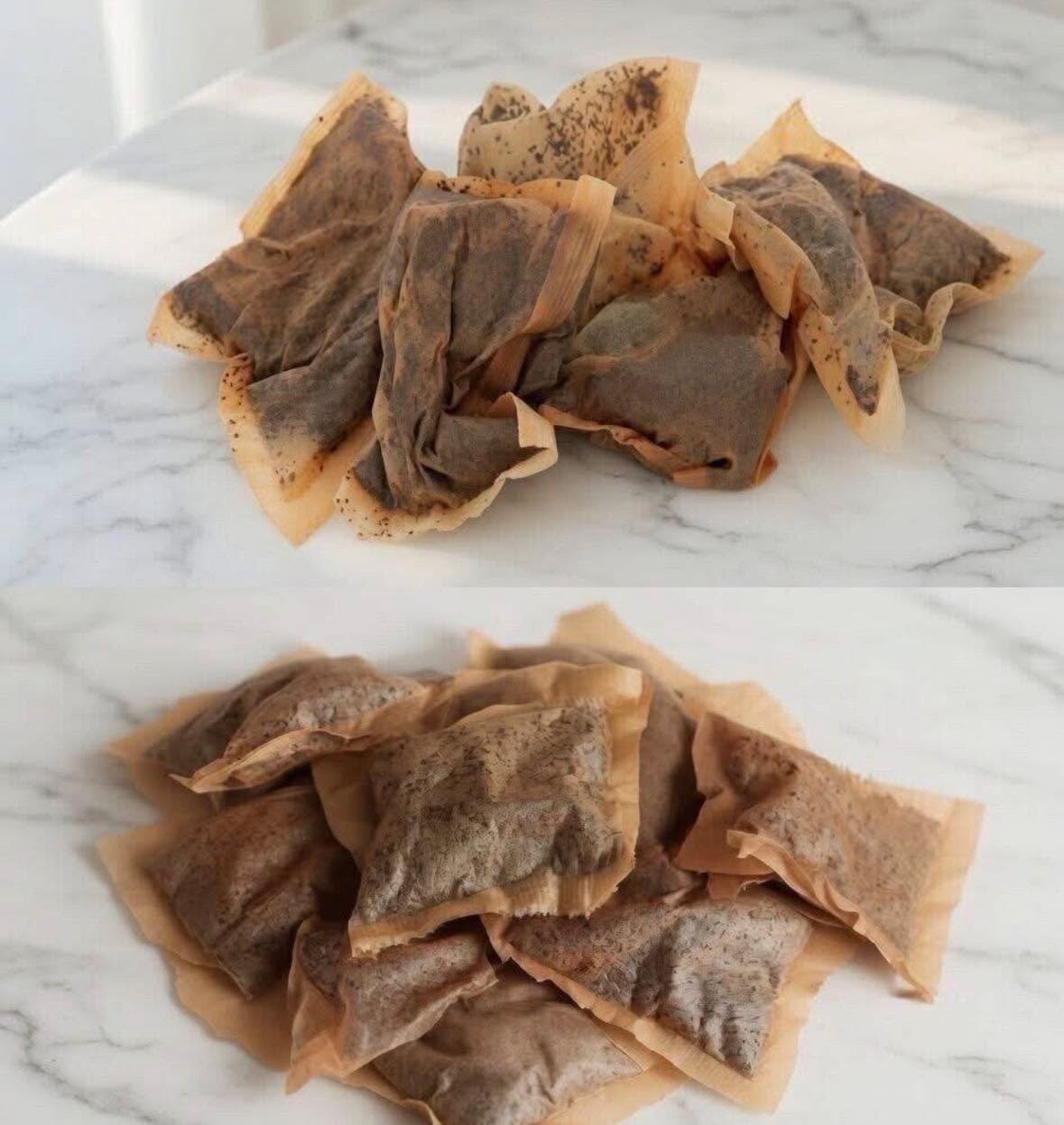
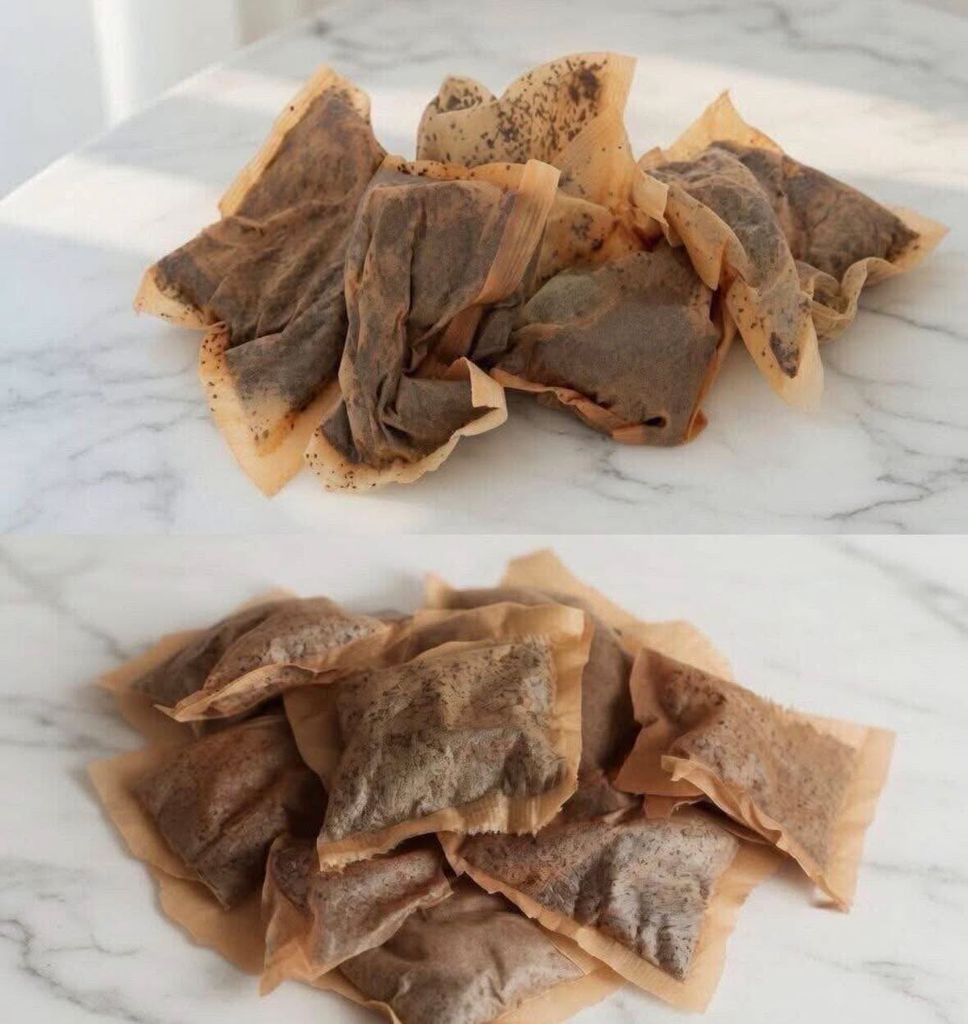
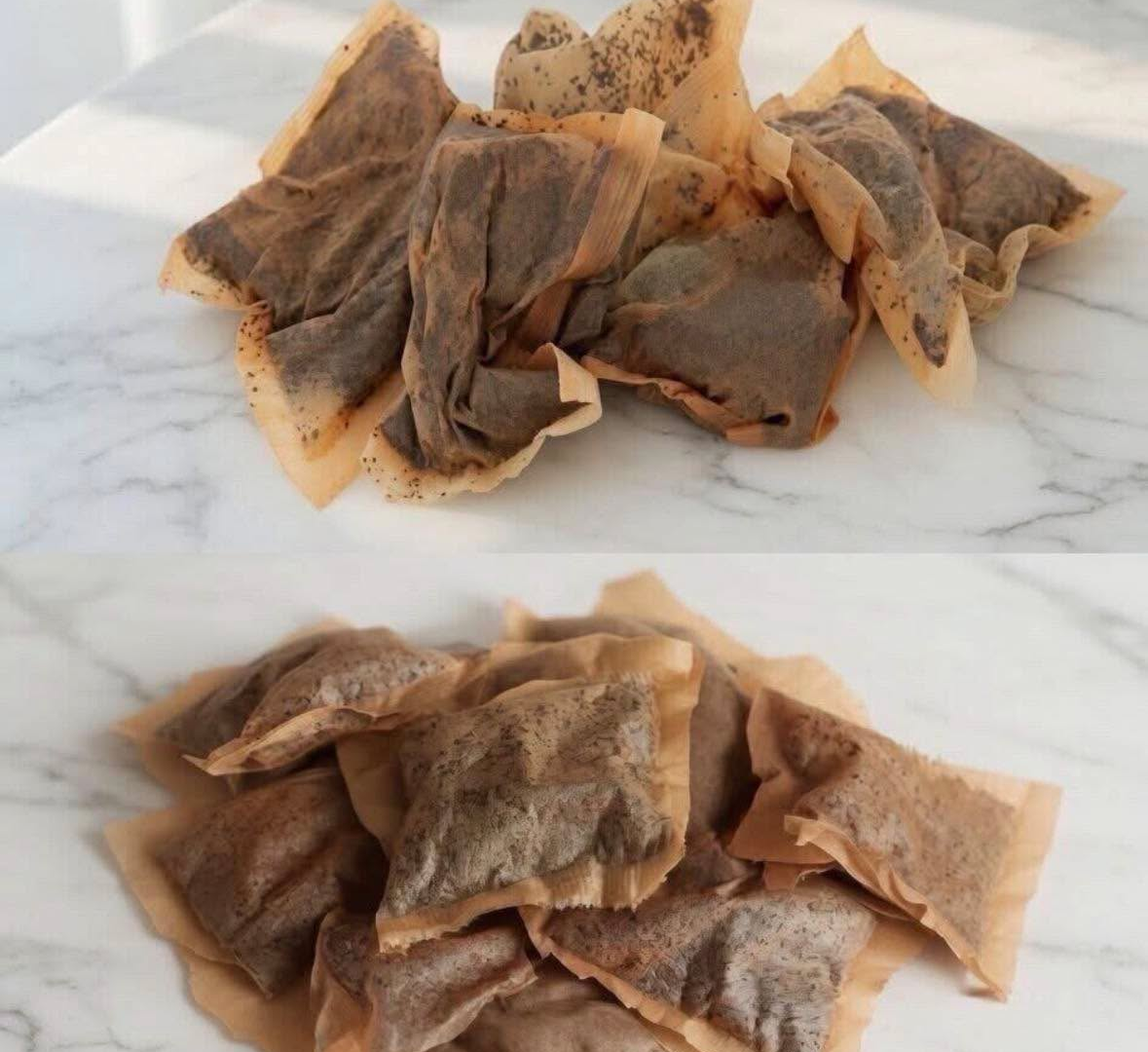
Most people finish a cup of tea, squeeze out the tea bag, and toss it straight into the trash.
But before you throw away those used tea bags, there are several ways you may be able to reuse them.
From helping your garden to reducing household odors, a used tea bag can have a second life. However, some viral claims about tea bags being a “miracle fertilizer” or pest killer are exaggerated.
Here are some of the more practical ways to reuse them.
1. Add Them to Your Compost
One of the simplest options is putting used tea leaves into a compost pile.
Tea leaves contain organic material that can contribute to compost as they break down.
However, there’s an important detail: not every tea bag is suitable for composting.
Some bags contain plastic fibers or synthetic materials that don’t break down like paper or plant material.
If you’re composting the bag itself, check what it’s made from first. Otherwise, simply cut open the bag and add the tea leaves while discarding the bag.
2. Use Tea Leaves in the Garden
Used tea leaves can be incorporated into soil or added to compost.
As organic material decomposes, it contributes to the overall organic matter in the soil.
But don’t expect a few tea bags to dramatically transform poor soil overnight.
Healthy plants need a combination of appropriate soil, water, light, nutrients, and good growing conditions.
Tea leaves are a small addition—not a replacement for proper fertilizer when fertilizer is actually needed.
3. Help Reduce Household Odors
A completely dried used tea bag can also be repurposed as a mild odor absorber.
Try placing a dry tea bag in areas where unpleasant smells develop, such as:
A refrigerator
A kitchen cupboard
A shoe cabinet
A gym bag
A drawer
The dried leaves can absorb some moisture and odors, although their effectiveness is limited compared with dedicated odor-absorbing products.
You can also add a few drops of an appropriate essential oil to a completely dry tea bag for fragrance, but keep scented materials away from pets and children.
4. Freshen Shoes
Here’s another simple trick.
Allow a used tea bag to dry completely and place one inside a shoe overnight.
The dry material may help absorb some moisture and odors.
Just remember to remove it before wearing the shoes again—and make sure the tea bag is completely dry so you aren’t introducing additional moisture.
5. Add Them to Your Compost Bin
If you have a kitchen compost container, used tea leaves can be a convenient addition.
Instead of throwing away the leaves every time you make tea, collect them and add them to your compost.
Over time, small amounts of organic kitchen waste can add up.
Again, remove the tea from plastic-containing bags before composting unless the manufacturer specifically confirms that the entire bag is suitable for your composting system.
Can Used Tea Bags Really Repel Garden Pests?
You’ll often see claims online that used tea bags can keep insects, cats, rodents, or other pests away.
The reality is more complicated.
Some tea aromas may be unpleasant to certain pests, but used tea bags aren’t a reliable universal pest-control method.
If you’re dealing with a serious pest problem, proper identification and an evidence-based control method are much more effective.
So feel free to experiment with harmless garden uses, but don’t rely on tea bags as your primary pest-control strategy.
What About Putting Tea Bags Directly on Plants?
This is another popular gardening tip.
Some gardeners place used tea bags around plants or bury the tea leaves in the soil.
This can add organic material, but there are a few things to consider.
Avoid Tea Bags With Plastic
Some conventional tea bags use synthetic fibers or plastic components.
Those materials aren’t something you want accumulating in garden soil.
Don’t Overdo It
More isn’t necessarily better.
A handful of tea leaves isn’t going to replace a balanced fertilizer, and large amounts of any single organic material can alter soil conditions.
Watch for Mold
Wet tea bags left sitting around can become moldy.
If you’re saving them for compost or garden use, handle and store them appropriately rather than allowing a pile of damp bags to sit indoors.
Can You Use Tea Bags for Cleaning?
There are also household uses for brewed tea.
The tannins and other compounds in tea can sometimes help with light cleaning or polishing, although tea isn’t a substitute for a proper household cleaner.
If you’re experimenting with tea as a cleaning solution, test it first on an inconspicuous area.
This is especially important with:
Light-colored fabrics
Porous stone
Unsealed wood
Delicate surfaces
Tea itself can stain.
What About Using Tea Bags on Your Skin or Eyes?
This is where viral “life hacks” deserve more caution.
You’ll sometimes see recommendations to put used tea bags directly on the eyes, skin, or irritated areas.
Although cool compresses can sometimes be soothing, a used tea bag isn’t sterile.
Once a tea bag has been used and left at room temperature, microorganisms can multiply on the damp material.
For anything involving broken, infected, or irritated skin—or the eyes—it’s better to use clean, appropriate products rather than a used tea bag.
Which Tea Bags Should You Avoid Reusing?
Be particularly careful with tea bags that:
Contain plastic or synthetic fibers
Have been sitting wet for a long time
Have developed mold
Contain added ingredients you’re allergic to
Have been contaminated with food or other substances
And never consume a tea bag simply because you found another use for it.
Once tea has been brewed and the bag has been left sitting around, food safety becomes a concern.
The Best Way to Save Used Tea Bags
If you want to reuse your tea bags, don’t leave them sitting in a pile on the kitchen counter.
Instead:
Remove excess water.
Allow the tea bag to dry completely.
Store it somewhere clean and dry if you’re saving it for a household use.
For composting, check whether the bag material is compostable.
Throw it away if it becomes moldy or develops an unpleasant smell.
If you only want the tea leaves, cutting open the bag and composting the contents is often the simplest option.
So, Are Used Tea Bags Really “Worth Their Weight in Gold”?
Probably not literally! 😄
The phrase makes a great headline, but a used tea bag isn’t a miracle household product.
What it is, however, is a small amount of material that doesn’t necessarily have to go straight into the garbage.
Depending on the type of tea bag, you can potentially reuse the contents for composting, gardening, mild odor control, or other simple household purposes.
And when millions of people drink tea every day, finding useful second lives for everyday waste can be worthwhile.
The Bottom Line
The next time you finish your tea, don’t automatically throw the bag away.
Let it dry and think about whether you can reuse it.
For gardening, the safest option is often to remove the tea leaves from the bag and add them to compost. For household uses, completely dried tea bags may help with mild odors.
Just remember that not every viral tea-bag hack is scientifically proven, and plastic-containing bags shouldn’t simply be buried in your garden.
Sometimes the most useful “life hack” isn’t discovering something magical—it’s simply finding another use for something you were about to throw away. 🍵🌿
Note: Used tea bags should not be eaten or applied to the eyes, wounds, or broken skin. Composting suitability depends on the bag material and your local composting system.